If you’ve ever wanted to show off what Microsoft Fabric can do — without spending days setting things up — Fabric JumpStart is exactly what you’ve been looking for.
What is Fabric JumpStart?
Fabric JumpStart is an open-source Python library built by Microsoft that lets you deploy ready-to-run demos, tutorials, and accelerators directly into your Microsoft Fabric workspace in just minutes. Think of it as a curated catalog of pre-built solutions — complete with data, notebooks, pipelines, and reports — that you can spin up with a single command.
It’s designed to remove the friction from exploring what Fabric can actually do. Whether you’re evaluating the platform, building a proof of concept, or just want to show a stakeholder something impressive, JumpStart gets you there fast.
Why It’s a Game-Changer for POCs and Demos
One of the biggest challenges when evaluating a new data platform is that standing up a meaningful demo takes time and effort — time you often don’t have. Fabric JumpStart solves this.
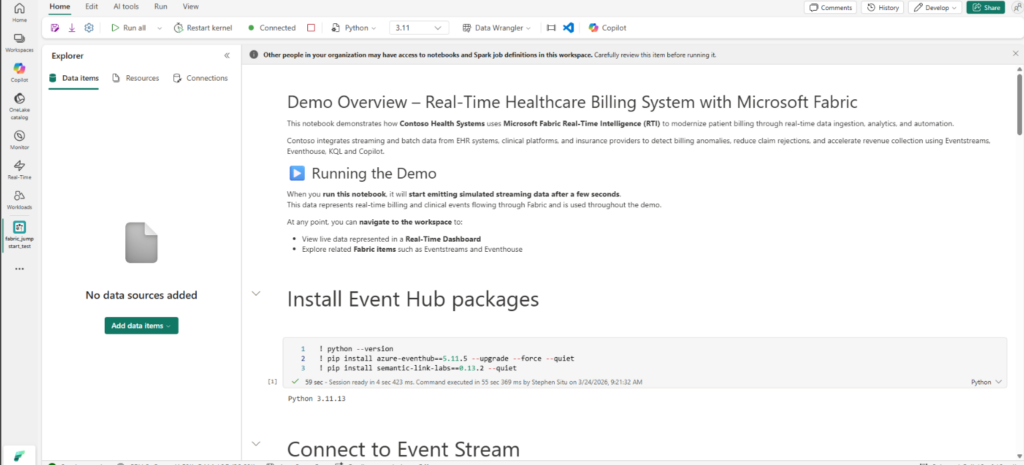
Each jumpstart in the catalog is self-contained: the data is bundled or auto-generated for you, and post-install notebooks walk you through any configuration needed. You browse the catalog, copy an install command, paste it into a Fabric notebook, and you’re off. No manual wiring. No hunting for sample data.
This makes it ideal for:
- Evaluators who want to quickly see Fabric’s capabilities in action
- Sales and pre-sales teams looking to run compelling demos
- Data teams exploring new Fabric features before committing to a full build
A Real Example: Healthcare Streaming Data
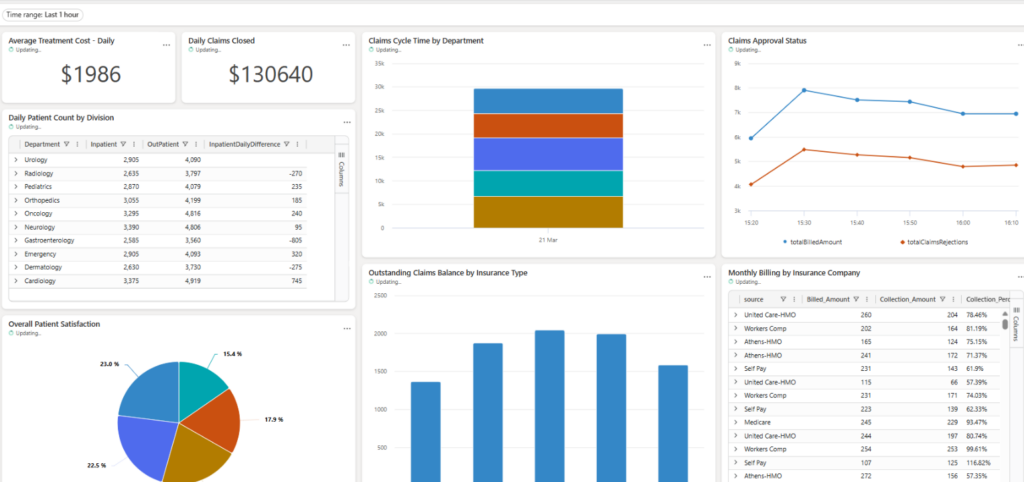
One great example of what JumpStart can do is a real-time healthcare use case. Using a pre-built notebook, you can simulate streaming patient or billing data flowing through Microsoft Fabric’s Real-Time Intelligence stack — think Eventstream ingesting live data, an Eventhouse storing it for ultra-low-latency queries, and a live KQL dashboard updating in real time right before your eyes.
The result? A fully functional, real-time streaming dashboard — up and running incredibly fast, with no infrastructure headaches. It’s the kind of demo that makes evaluators stop and say “okay, this platform is the real deal.”
Getting Started
If you want to try it yourself, all you need is Python 3.10–3.12 and access to a Microsoft Fabric workspace. Install the library in your notebook with:
pip install fabric-jumpstartThen browse the catalog and pick something that fits your use case. The full catalog is available at jumpstart.fabric.microsoft.com.
Fabric JumpStart is community-driven and open source — so as the ecosystem grows, the catalog keeps getting better too.